
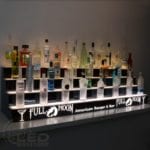
 Display Shelves
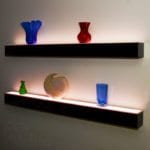 Floating Shelves
 Low Profile Shelves
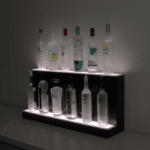 High Profile Shelves
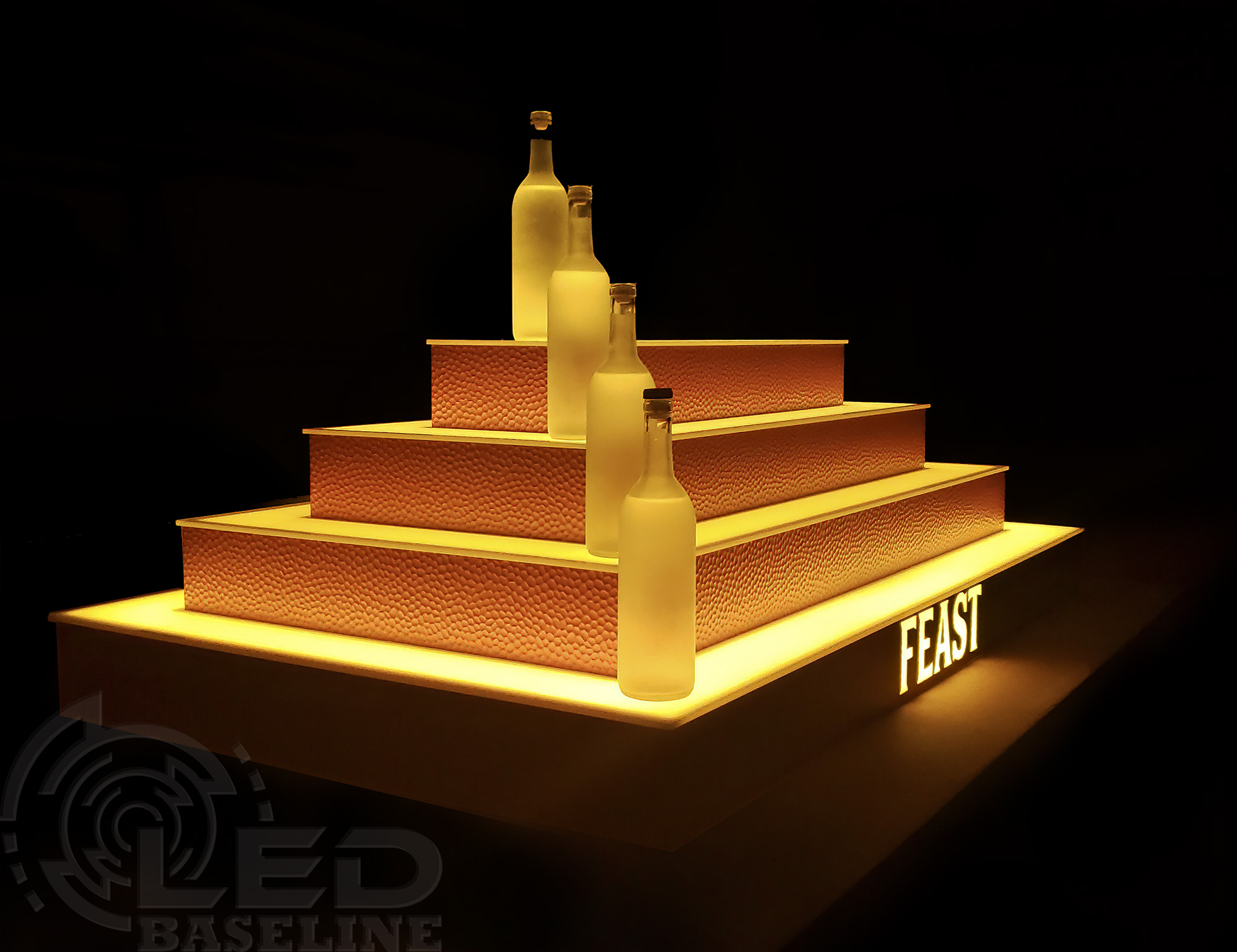 Island Shelves
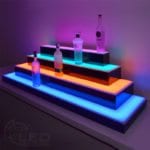 Return Style Shelves
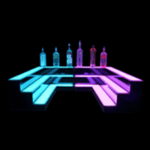 Corner Shelves
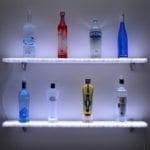 Acrylic Floating Shelves
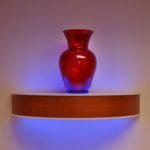 Curved Floating Shelves
 Standard LED Floating Shelves
 Luma LED Floating Shelves
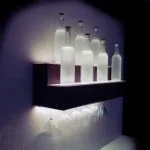 LED Wall Shelf with Glass Rack
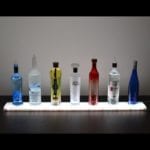 Acrylic LED Display Stands
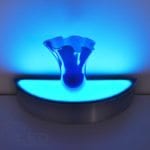 Curved LED Display Stands
 Standard Display Stands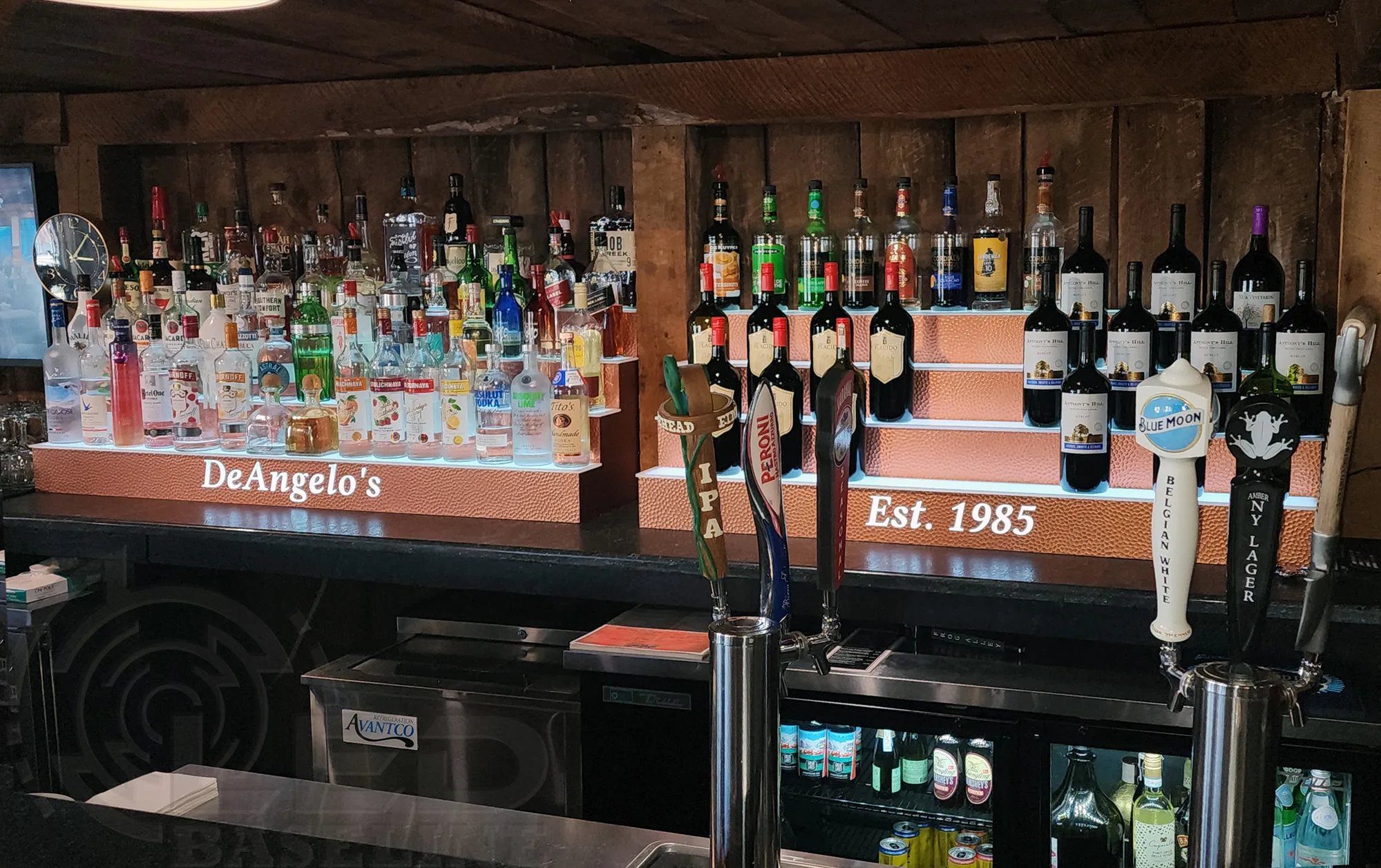
Understanding the Bottle Math
When designing a backbar, one of the first practical questions is also one of the simplest:
How many shelves should actually go behind the bar?
While every space is different, most professional bars end up using two to four shelves. This range tends to provide the best balance between bottle capacity, visibility, and clean visual design.
Too few shelves can limit storage and display. Too many can make the wall feel crowded and make it harder for guests to visually navigate the bottles.
The goal is to create a backbar that feels organized, balanced, and easy to read at a glance.
Understanding the Bottle Math
Planning shelf spacing starts with the bottles themselves.
Although liquor bottles vary widely in height depending on the brand, most standard bottles fall into a fairly narrow diameter range. The majority measure somewhere between 3.5 and 4.5 inches across.
This is why many backbar shelves are designed around depths like 4.5 inches, 8 inches, 10 inches, or 12 inches. Those dimensions comfortably support the base of most bottles while keeping the display tight and visually clean.
Bottle height is where more variation appears. Tequila bottles, specialty liqueurs, and decorative brands can be significantly taller than standard whiskey or vodka bottles, so designers typically allow enough vertical space between shelves to accommodate those taller shapes.
In some installations, however, vertical space behind the bar is limited. Mirrors, POS systems, televisions, or architectural elements can make it difficult to fit traditional full height shelving.
In those situations, many bars use low profile shelves. These shelves keep the vertical spacing tighter while still allowing bottles to sit securely and remain visible. Low profile configurations are especially common in modern bars where the goal is a cleaner, more minimal backbar design.
Why Two to Four Shelves Works for Most Bars
Most bars settle into a layout of two, three, or four shelves because it naturally fits both the architecture of the bar and the way bottles are used during service.
A smaller cocktail bar might use two shelves for a more minimal look. Larger restaurants and hotel bars often use three or four shelves to expand bottle display while maintaining visual balance.
In many cases the shelves become the focal point of the room. Guests naturally look toward the backbar, and the lighting and bottle arrangement help shape the atmosphere of the entire space.
Designing Around POS Systems and Beer Taps
Another factor that often shapes backbar layouts is the placement of equipment.
Many working bars have a point of sale terminal directly in the center of the backbar, with shelving installed on either side of it. This keeps the screen clear while still allowing the bottle display to frame the workstation.
In other setups, especially sports bars or breweries, shelves may be placed around or above beer taps so the liquor display integrates with the draft system rather than competing with it.
Because of these layout constraints, shelves are often installed in sections instead of as one continuous run across the wall.
Custom lengths make it easier to work around POS stations, draft towers, refrigerators, and other equipment that lives behind the bar.
Organizing Bottles So Guests Can Read the Bar
A good backbar does more than store bottles. It helps guests understand what the bar offers.
Many bartenders and designers organize shelves loosely by category. Premium or specialty spirits often live higher on the wall, while core liquors like whiskey, vodka, and rum sit on the most visible middle shelves.
This arrangement makes it easier for guests to scan the display and quickly recognize brands or styles they want to order.
Using Lighting to Guide Attention
Lighting plays a subtle but powerful role in how a backbar feels.
Illuminated shelves create depth and make the bottles stand out, especially in dim hospitality environments. With programmable LED systems, shelves can either glow uniformly or be adjusted independently depending on the design goals.
Some bars prefer to keep everything synchronized for a clean, elegant look. Others experiment with subtle variation between shelves to highlight certain bottles or sections of the display.
Because the lighting can be controlled through a smartphone app, shelves can be programmed together or separately depending on how the bar wants the space to feel throughout the night.
During normal service hours, most venues prefer soft white or bright white lighting so labels remain easy to read and bottles stay visually crisp.
Planning the Right Layout
Every bar is a little different, but most successful backbars follow the same general idea: a few well spaced shelves that highlight the bottles without overwhelming the wall.
When designers plan a new installation, they usually look at the overall width of the bar, the height available behind it, and how equipment like POS stations or beer taps affect the layout.
From there, shelves are spaced and sized to create a balanced display that works both for staff during service and for guests looking at the bar from across the room. In spaces with lower ceilings or tighter layouts, low profile shelves are sometimes used to allow more tiers without crowding the backbar.
In practice, that usually leads back to the same conclusion:
two to four shelves is the sweet spot for most backbars.
Planning a Backbar Project
Whether you’re building out a new restaurant, upgrading an existing bar, or designing a home bar setup, thoughtful shelf layout makes a big difference in how the space feels.
Illuminated shelving can turn a simple bottle display into one of the most recognizable features in the room.
If you’re planning a backbar installation and want help choosing shelf sizes or layout options, we’re always happy to talk through the details.